
Basement to bin: plan the route
Choose the service before moving heavy items
Measure the exit
Item size, doors and stair turns
Sort downstairs
Protect documents and retained possessions
Choose who loads
Self-load or ask for a separate estimate
Plan the week
Leave time for final checks and pickup
Planning illustration, not a lifting assessment or a real customer case study.
Save this illustrated checklist (SVG)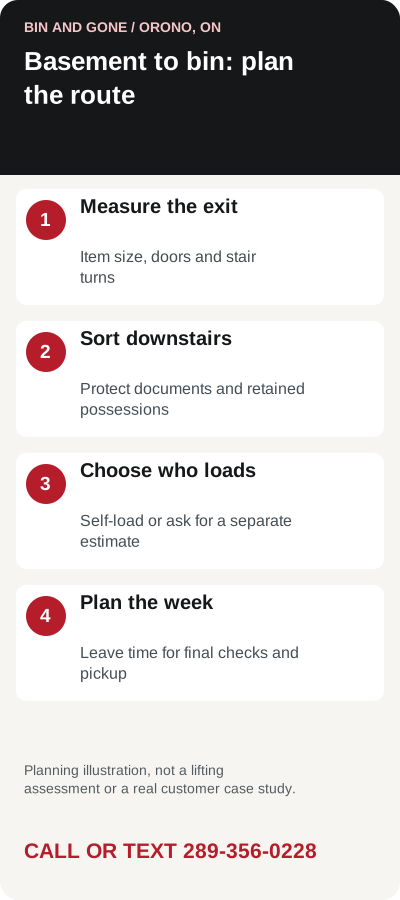
The stairs can decide the project before the bin does
A sofa that fits in the basement may not leave the same way after a handrail, doorway or room layout has changed. Measure the item, the narrowest door opening and the turn at the top of the stairs. Look for a clear exit route before committing to a disposal plan. Do not assume an item can be dismantled without checking its construction.
Ask the people who will be loading whether they can safely manage the route. Customer-loaded rental means the household or its own contractor brings approved material to the bin. It does not include carrying furniture upstairs. If the route or lifting task exceeds what your group can handle, that is a reason to ask about a separately quoted removal service, not a reason to take a risk.
- Measure the largest item and every tight turn.
- Check handrails, lights and door swings.
- Keep a clear walking route throughout the project.
- Agree who will carry each bulky object.
Sort storage before moving it twice
Basement boxes can contain documents, keepsakes, borrowed equipment and useful household supplies alongside unwanted possessions. Sort one shelf or room at a time. Give important paperwork and sentimental objects a labelled holding area away from the disposal route. A bin at the end of the driveway should not become the default destination for everything that is inconvenient to inspect.
Create a short contents list after sorting rather than estimating from the number of boxes. Ten lightly filled storage totes are different from ten boxes of dense material. Photograph the remaining pile and describe any cabinets or upholstered furniture that still need moving. This information is more useful for discussing a bin than saying the basement is half full, which gives no reliable picture of volume or weight.
Separate a clearout from a basement renovation
Removing household storage is not the same load as stripping flooring, wall panels or a bathroom. If both are happening, describe both stages to Bin and Gone. Tile, fixtures and other dense renovation material can change the weight discussion even when the pile looks small. Heavy debris, appliances and electronics need confirmation; chemicals, hazardous materials and cinder blocks are excluded.
Do not disturb suspect or unknown building material simply to make it fit a bin. Stop and obtain qualified advice where assessment is needed. For ordinary waste questions, Clarington provides links to the regional disposal information. A private rental is one option for approved project material, not a replacement for every special disposal route. Keep those separate items out of the general pile until their destination is clear.
Use the rental week as a working schedule
Seven days are included in the approved rental package. Build a realistic plan around the evenings or days when your helpers can actually work. In a hypothetical basement clearout, the first loading session might handle small approved boxes, a second handle manageable furniture and a final session check cupboards and the storage room. This is a planning example, not a completed customer project.
Leave time for questions that arise when hidden contents are uncovered. Do not schedule pickup at the same moment you expect to finish the last large item. Confirm delivery and collection arrangements directly, because preferred dates are not guaranteed availability. If you might need longer than the included period, ask about that before booking; no extension price or extra-day rule is stated here.
Send the details that make a basement estimate useful
For Orono customer-loaded rental, the confirmed package is $563.87 CAD including HST for the 1 ton minimum, seven days, delivery, pickup and fuel. Each additional ton is $226 including HST. Bin volume and loaded weight are different questions. Neither the size of the basement nor an illustration establishes the final weight or the bin you should receive.
Call or text 289-356-0228 and explain whether the project is household storage, furniture, renovation material or a combination. Mention the largest object, who will load it, where the bin could sit and your preferred dates. If you need carrying help, say that at the beginning. You can then compare the appropriate rental or separate removal option without discovering halfway through that the difficult part was getting the contents out of the basement.
Questions before you book
Will the driver carry basement furniture upstairs?
Carrying and loading are not included in the customer-loaded rental package. Discuss a separate crew-loaded estimate if you need that work.
Can basement renovation waste go with household storage?
Describe both material types before booking. Heavy debris and unusual items require confirmation, and excluded materials must stay out of the bin.
Compare all five bin profiles, review the rental price, check material acceptance and plan delivery access.
Sources and how this guide was prepared
Written for Orono, Ontario using the published Bin and Gone rental offer and the official references below. Check the linked authority for current municipal rules. Project examples and checklist graphics are planning illustrations, not completed customer jobs or engineering advice. Actual materials, access, bin availability and booking terms require confirmation.
Business rates: Bin and Gone rental pricing. Loading responsibilities: rental information.