
An estate clearout, in the right order
Protect decisions before removing possessions
Agree authority
One coordinator and clear disposal approval
Protect contents
Documents, valuables and keepsakes first
Confirm rehoming
Recipient and collection, not a maybe
Plan removal
Approved load, helpers, access and dates
Organising illustration, not legal advice or a record of a customer estate.
Save this illustrated checklist (SVG)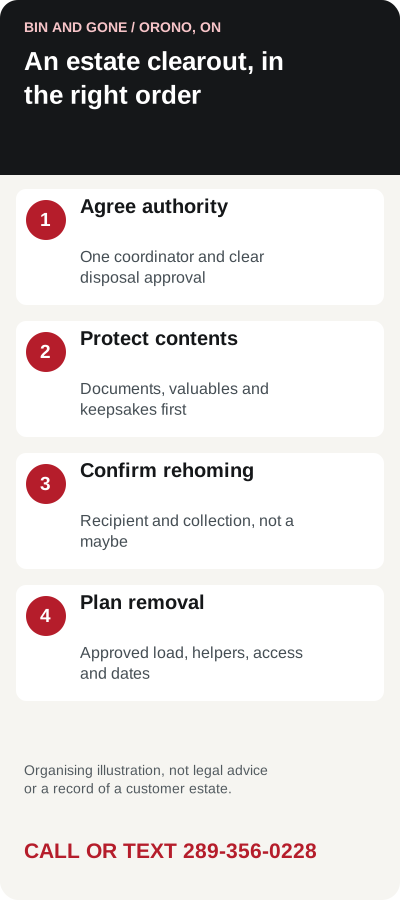
Create a decision process before a disposal pile
An estate property can hold ordinary clutter alongside possessions with financial or sentimental significance. Start by agreeing who can approve items for removal and which rooms need review first. Where authority or ownership is uncertain, obtain appropriate advice before discarding anything. This is a practical organising checklist, not legal guidance on administering an estate.
Use three visible areas: protected contents, items awaiting a decision and approved disposal. Give every helper the same instructions. Avoid putting undecided items near the bin, because physical proximity can turn a temporary decision into a permanent one. A short written record of what has been approved is more dependable than several relatives remembering different conversations.
- Identify the person coordinating the clearout.
- Protect documents, keys and personal records.
- Set aside valuables and sentimental possessions.
- Obtain approval before adding anything to disposal.
Rehoming needs an actual recipient and collection plan
A promise that somebody might want a wardrobe is not a completed rehoming arrangement. Ask relatives or potential recipients to identify the item and agree how and when it will leave the property. Keep those possessions separate from the waste pile. If an organisation may accept furniture, confirm its requirements before relying on collection as part of the timetable.
For a hypothetical estate clearout, one room might hold boxes for family review while a garage holds furniture that has a confirmed recipient. Only the remaining authorised disposal material would be discussed for a bin. This approach avoids renting capacity for belongings that should never enter the load. It also reduces the pressure to make important decisions while a delivery or collection vehicle is waiting.
Describe the contents honestly, including special items
Give Bin and Gone a practical inventory: household contents, cabinets, furniture, appliances or material from an earlier renovation. Identify the largest pieces and whether they are upstairs, downstairs or already outside. Appliances, electronics and heavy debris need confirmation. Chemicals, hazardous materials and cinder blocks are excluded from the rental; unknown containers should remain separate until their route is resolved.
The five illustrated profiles are approximate size comparisons, not a promise that a whole estate fits in one load. Rooms and floor area do not establish disposal volume, and volume does not determine weight. Photograph the authorised disposal group after sorting, rather than sending a picture of every retained possession. This keeps the discussion focused on the material that actually needs service and protects unnecessary personal detail.
Choose self-loading or a separate removal estimate
A customer-loaded bin suits a family or its own contractor that can safely move the approved contents outside. It is not an in-home carrying service. Before choosing that option, think about stairs, doorways, distances and the people available to help. Avoid arranging a rental on the assumption that the driver will empty rooms or dismantle furniture.
If carrying and loading are the main challenge, ask about a separately quoted crew-loaded service. Explain the route and the contents so the discussion starts with the correct scope. The $563.87 rental package does not set the price for an estate removal crew. Keep those estimates separate, and do not treat a special campaign or an hourly labour discussion as an automatic part of ordinary bin rental.
Build a calm schedule around the property deadline
Where there is a sale, tenancy or another property deadline, allow time for family review before the included rental week starts. Set a realistic loading schedule and keep essential access available for delivery and pickup. Clarington provides official waste information for items needing another destination. Do not use the bin to bypass a special material route simply because the property needs to be cleared quickly.
The approved customer-loaded package is $563.87 CAD including HST for the 1 ton minimum, seven days, delivery, pickup and fuel. Each additional ton is $226 including HST. Confirm dates, materials, placement and any longer period directly. Call or text 289-356-0228 with your Orono location and explain that the estate contents are being reviewed. A careful plan is more useful than a rushed promise to empty every room in a fixed time.
Questions before you book
Can we arrange a bin before everyone has reviewed the contents?
You can discuss options, but avoid treating undecided possessions as disposal material. Agree authority and protect documents, valuables and keepsakes before loading.
Does estate bin rental include emptying the house?
No. The approved package is customer-loaded. Ask for a separate crew-loaded estimate if carrying and loading are required.
Compare all five bin profiles, review the rental price, check material acceptance and plan delivery access.
Sources and how this guide was prepared
Written for Orono, Ontario using the published Bin and Gone rental offer and the official references below. Check the linked authority for current municipal rules. Project examples and checklist graphics are planning illustrations, not completed customer jobs or engineering advice. Actual materials, access, bin availability and booking terms require confirmation.
Business rates: Bin and Gone rental pricing. Loading responsibilities: rental information.