A driveway plan in four checks
Discuss the surface before delivery
Surface
Show cracks, slope and recent work
Protection
Agree a suitable approach
Access
Keep entrances and truck route usable
Collection
Clear the same approach for pickup
Placement-planning illustration, not an engineering assessment or damage-free guarantee.
Save this illustrated checklist (SVG)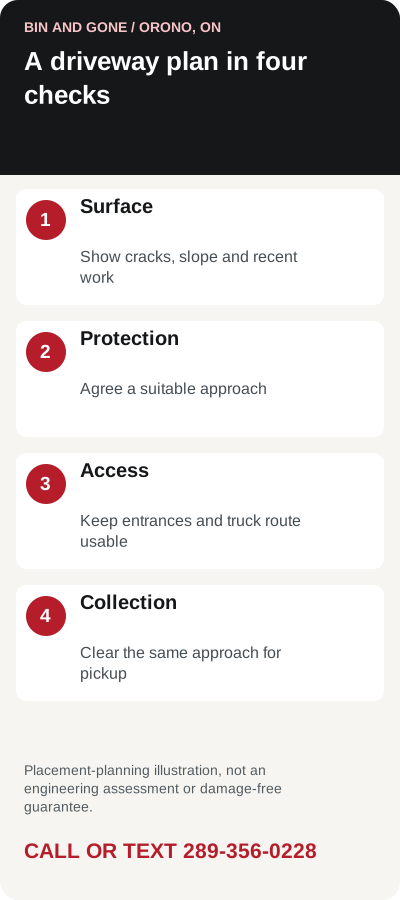
Describe the surface you actually have
Tell Bin and Gone whether the proposed spot is asphalt, concrete, gravel, paving stones or another surface. Mention recent resurfacing, visible cracks, sinking edges and any area that already collects water. Those details are more useful than describing the driveway as 'large enough,' because available space and suitability are different questions.
Take clear photographs from the road toward the proposed spot and back toward the exit. Add a close view of any concern. Photos help explain the layout, but they are not an engineering assessment. A driveway that supports your car is not automatically suitable for a delivery vehicle or a bin filled with dense material.
Agree a protection approach with the provider
Ask whether protective material is appropriate, who supplies it and where it should be placed. Do not buy an improvised support system and assume the driver can safely use it. The agreed approach needs to work with the actual bin, the ground and the delivery method, not just with a picture found online.
Protection is a risk-reduction discussion, not a promise that marks or damage cannot happen. If the surface is newly installed or its condition is uncertain, ask the installer or property owner about restrictions before you book. Provide those restrictions to the bin provider so the proposed arrangement can be reviewed or a different spot considered.
- Identify the surface and any recent work.
- Show cracks, weak edges and drainage concerns.
- Ask what protection is suitable for this delivery.
- Confirm responsibility for supplying any agreed material.
Keep the truck route separate from your working area
Draw two simple areas on a photo: the vehicle route and the space you need to carry items into the bin. A position that saves a few steps can create a difficult approach for the truck. The provider needs to review both parts, including any turn, gate, overhanging branch or vehicle that will remain on the property.
Check what must stay accessible throughout the rental. That may include a garage door, a daily-use entrance or a route shared with another household. Do not plan to move the bin yourself after delivery. If the chosen position proves inconvenient, contact the provider instead of pushing, towing or lifting it with equipment not approved for that task.
Do not use the road as an automatic backup
If the driveway cannot be used, stop and confirm an alternative before delivery. Clarington's roadway guidance says waste bins and construction equipment cannot be stored on the road. Any proposal involving the municipal right of way needs direct, site-specific municipal confirmation; a road occupancy permit is not blanket permission for a waste bin.
This matters for an Orono house with limited parking or a shop without a private frontage. A boulevard can also be municipal land rather than extra driveway space. Describe the exact proposed position and obtain the required confirmation before treating it as an alternative. This guide does not grant permission or replace the municipality's instructions.
Plan for the loaded bin and the collection day
A bin will be collected with the load you add, so tell the provider about heavy or unusual materials before choosing a spot. Do not rely on how empty the container looks. Material type, approved loading limits and ground conditions matter alongside volume. Keep chemicals, hazardous materials and cinder blocks out of the proposed rental load.
Before collection, remove parked vehicles and loose clutter from the agreed approach. Tell the business if conditions have changed, such as standing water or a newly blocked gate. Document existing surface condition for your own records, but do not assume photographs establish a damage policy. Ask about the applicable terms rather than inventing an assurance.
Send a useful placement inquiry
A practical message could say: 'Orono driveway, older asphalt with cracks near one edge, garage access needed all week, household clearout, photos available.' That gives the business a specific problem to discuss. It is a hypothetical planning message, not evidence of an inspected or approved site.
Call or text 289-356-0228 with the address, surface concerns, proposed load and preferred dates. The approved rental package is $563.87 CAD including HST for the 1 ton minimum, seven days, delivery, pickup and fuel, with each additional ton $226 including HST. Confirm the site and bin suitability separately from those published package inclusions.
Questions before you book
Will protective boards guarantee no driveway damage?
No. Ask the provider about an appropriate protection method for your surface and delivery. Ground condition, vehicle access and the loaded bin still need review; this guide does not offer a damage-free guarantee.
Can the bin be moved after delivery?
Do not attempt to move it yourself. If the position needs to change, contact the provider and confirm what can be arranged safely before continuing.
Compare all five bin profiles, review the rental price, check material acceptance and plan delivery access.
Sources and how this guide was prepared
Written for Orono, Ontario using the published Bin and Gone rental offer and the official references below. Check the linked authority for current municipal rules. Project examples and checklist graphics are planning illustrations, not completed customer jobs or engineering advice. Actual materials, access, bin availability and booking terms require confirmation.
Business rates: Bin and Gone rental pricing. Loading responsibilities: rental information.