Rural-property placement check
Identify restricted areas first
Locate
Ask the owner about known systems
Avoid
Keep off tank and distribution areas
Show the route
Explain approved access and restrictions
Confirm
Agree a different, suitable placement
Planning illustration only. Not a survey, setback calculation or structural assessment.
Save this illustrated checklist (SVG)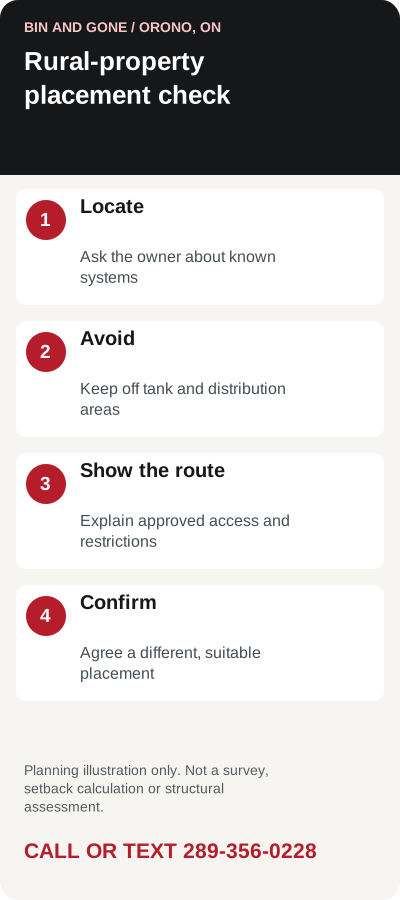
An open patch of ground is not an approved delivery spot
A rural property can offer plenty of visible space while still having unsuitable areas for a delivery vehicle or loaded bin. Underground components may not be apparent from a photo. Tell Bin and Gone what you know about the property instead of directing the driver to whichever lawn or shoulder looks convenient on the day.
The delivery route matters as much as the final position. Avoid a plan that reaches a suitable driveway area by crossing a known septic component or another area the owner has identified as restricted. A closer loading position is not an improvement if the approach passes over infrastructure that should be kept clear.
Find the system information before the booking
Ask the property owner for reliable information about the septic tank and distribution area, well, known service lines and any restrictions on vehicle access. Existing records or advice from a qualified professional may be needed when the layout is uncertain. Do not guess the location from where grass appears greener or where a previous vehicle happened to park.
This is a planning exercise, not a request to excavate or open a tank. Do not dig to locate a component for the bin delivery. If the relevant areas cannot be identified, pause the placement decision and get suitable professional guidance. Neither this article nor a rental inquiry verifies that the ground or underground infrastructure can support a particular load.
- Identify the tank and distribution area from reliable information.
- Tell the provider about the well and other known services.
- Mark restricted areas without disturbing infrastructure.
- Arrange professional advice where the layout is uncertain.
Keep the SepticSmart warning simple
Ontario's SepticSmart resource advises against driving or parking over the septic tank or distribution system. For this delivery plan, the practical response is to keep the vehicle route and bin placement elsewhere. Do not reinterpret a short delivery visit as an exception or assume the bin's empty weight makes the location acceptable.
No universal distance from a well or septic component is provided here. Property layout, ground conditions and applicable requirements need an individual review. Ask the appropriate professional about site restrictions rather than using an invented setback, an estimated safe vehicle weight or a board under the bin as a substitute for assessment.
Show the provider the usable route
Use a labelled photograph or simple sketch to show the intended entrance, route, approved hard-surface area and places the vehicle must avoid. Note any gate, narrow turn, low branch or slope. Send the explanation before a delivery is agreed so access can be considered rather than negotiated beside a loaded truck.
Be precise about what your drawing means. It is a communication aid, not a survey, engineered site plan or proof of buried-service locations. The owner should confirm the information. If a site restriction changes, tell the business immediately and discuss whether the proposed arrangement still works before moving ahead.
Protect the plan throughout the rental
A rental period can involve family members, helpers and contractors who do not know the property. Explain the restricted areas to everyone who is parking vehicles or moving materials. Do not allow the agreed vehicle route to disappear under a temporary pile or assume the driver can use another part of the property for collection.
Keep the load within the provider's instructions and disclose material changes. Dense renovation waste needs its own approval and loading discussion. Do not place chemicals, hazardous material or cinder blocks into the rental bin. The visible cubic space and the ground plan do not establish an allowable load weight.
Make the first message about both load and land
A helpful Orono inquiry states the project, proposed materials, preferred dates and known site restrictions together. For example, a household clearout might have driveway space available but a septic area beside it that must not be crossed. That is a hypothetical planning situation, not a claim that Bin and Gone has inspected a particular property.
Call or text 289-356-0228 and explain the information you have. The approved customer-loaded rental package is $563.87 CAD including HST for the 1 ton minimum, seven days, delivery, pickup and fuel; each additional ton is $226 including HST. Confirm the placement individually. The package price is not an engineering assessment or assurance that every rural site is deliverable.
Questions before you book
Can the truck briefly cross the septic bed for delivery?
Do not plan that route. Ontario's SepticSmart guidance says not to drive or park over the tank or distribution system. Identify another approach and obtain appropriate advice if the layout is uncertain.
How far must the bin be from a well?
This guide does not provide a universal setback. Tell the provider about the well and obtain site-specific advice from the appropriate qualified professional or authority before agreeing on placement.
Compare all five bin profiles, review the rental price, check material acceptance and plan delivery access.
Sources and how this guide was prepared
Written for Orono, Ontario using the published Bin and Gone rental offer and the official references below. Check the linked authority for current municipal rules. Project examples and checklist graphics are planning illustrations, not completed customer jobs or engineering advice. Actual materials, access, bin availability and booking terms require confirmation.
Business rates: Bin and Gone rental pricing. Loading responsibilities: rental information.