Four checks before choosing a size
A bin label is only the starting point
Contents
Name the actual material and unusual items
Dimensions
Measure the longest and largest objects
Access
Show placement and the delivery approach
Confirmation
Available profile, limits and dates
Size-decision illustration. No profile is a guaranteed usable capacity or weight allowance.
Save this illustrated checklist (SVG)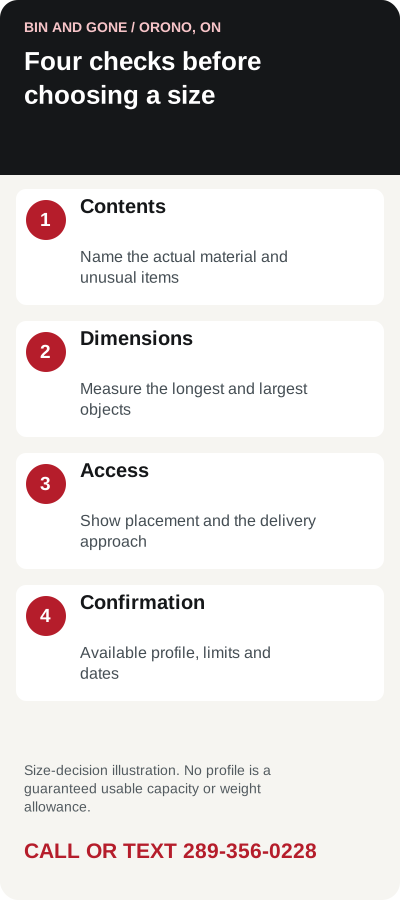
A small project is not automatically a small load
One bulky wardrobe can create a different space problem from several dense boxes of renovation material. Begin with a practical contents list and the dimensions of the longest and largest items. Where possessions can be safely dismantled by the people doing the work, describe the intended disposal form. Do not assume everything will pack tightly simply because it belongs to one room.
A hypothetical garage project might include mostly loose storage items, while a bathroom project of a similar visible pile size may contain dense fixtures or tile. The garage could raise a volume question; the bathroom could raise a material and weight question. They should not receive the same recommendation based only on a description such as small cleanout. Explain what is in the pile first.
- What material will actually enter the bin?
- What is the longest or largest item?
- Who will carry and load it?
- Where can the truck deliver and collect?
Read the five profile drawings as comparisons
The illustrated low-profile bin is approximately 5.8 cubic yards by the supplied measurements. The tall-and-narrow profile is approximately 14.4, the yellow profile 14.8, the standard profile 15.6 and the long-standard profile 16.3. These are calculated comparisons using decimal-foot measurements. They are not certified usable capacity, exact scale drawings or a statement of which bin is available today.
Height, width and length all influence the practical discussion. A low profile may look easier to reach, but loading suitability still depends on the actual bin, approved method and material. A longer profile may address one object dimension without being appropriate for the delivery position. Use the drawings to explain your questions and ask the supplier to confirm the suitable available equipment.
Do not use extra volume to solve a weight problem
Weight and volume describe different things. Dense material can add weight well before the bin looks full. Heavy debris must be reviewed before loading, and chemicals, hazardous materials and cinder blocks are excluded. Appliances and electronics also require confirmation. A large bin does not make an unapproved material acceptable, and unused space does not override the agreed loading limits.
The rental offer states a 1 ton minimum and an additional-ton price. It does not define a kilogram conversion, partial-ton billing rule or material-specific maximum for the customer to infer. Ask about the actual load and conditions rather than converting an illustration into a weight allowance. If the project contains both household clutter and renovation debris, identify both groups in the inquiry.
Include delivery access and the way you will load
Photograph the proposed position and the approach from the road. Mention tight gates, overhead obstructions, shared access and vehicles that need to remain usable. The illustrated bin dimensions are not the entire truck clearance requirement. A position that accommodates the container may still be unsuitable for placing or collecting it. Confirm access with the supplier instead of making a decision from a diagram alone.
Choose the service scope honestly. Customer-loaded rental suits people who can safely bring approved material to the bin. It does not include carrying from rooms or loading by the driver. If those tasks are the real obstacle, ask for a separate removal estimate before choosing a profile. A larger bin cannot compensate for a staircase or lifting task that your group cannot manage.
Ask the question with enough detail to get a useful answer
The approved package is $563.87 CAD including 13% Ontario HST for the 1 ton minimum, seven days, delivery, pickup and fuel. Each additional ton is $226 including HST. Do not treat those figures as a published price list for every profile or invent a small-bin discount. Confirm the selected equipment, material and booking conditions directly.
Call or text 289-356-0228 with your Orono location, disposal list, item measurements, placement description and preferred dates. Ask: Which available bin suits this material and space? That is more useful than requesting a small bin without defining the load. The contact page can prepare a message for your own app, but no bin or date is reserved until the business confirms the arrangement.
Questions before you book
Are the illustrated cubic-yard figures exact usable capacities?
No. They are approximate calculated comparisons from supplied decimal-foot measurements. Confirm actual measurements, usable capacity and available inventory before booking.
Does a larger bin include a higher weight allowance?
Do not infer that. Bin volume and loading weight are separate questions. Ask about the actual material and approved loading limits.
Compare all five bin profiles, review the rental price, check material acceptance and plan delivery access.
Sources and how this guide was prepared
Written for Orono, Ontario using the published Bin and Gone rental offer and the official references below. Check the linked authority for current municipal rules. Project examples and checklist graphics are planning illustrations, not completed customer jobs or engineering advice. Actual materials, access, bin availability and booking terms require confirmation.
Business rates: Bin and Gone rental pricing. Loading responsibilities: rental information.